
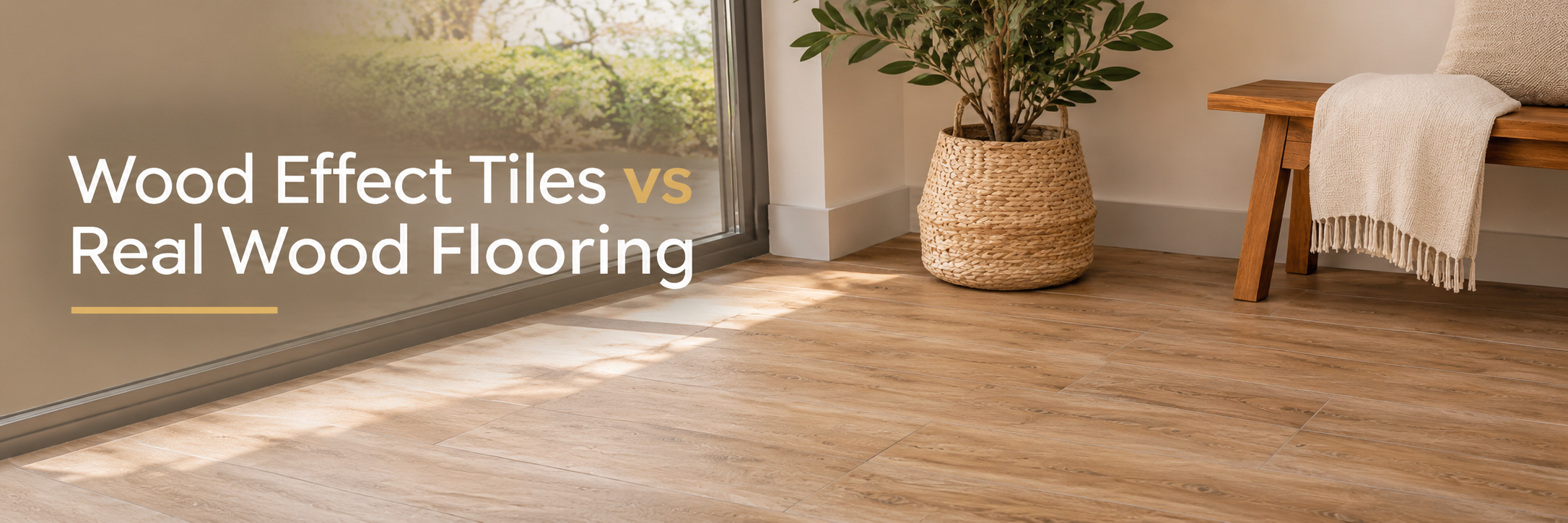
Wood Effect Tiles vs Real Wood Flooring: Which Is Better for Your Home?
Choosing between wood effect tiles and real wood flooring is an important decision when renovating or designing your home. Both flooring options offer the timeless appearance of natural wood, but they differ in durability, maintenance, comfort, cost and practicality.
While real wood flooring provides natural warmth and character, wood effect porcelain tiles offer a durable, water-resistant and low-maintenance alternative.
So, are wood effect tiles better than real wood flooring? The answer depends on your lifestyle, the room you’re renovating and your flooring priorities.
In this guide, City Tiles & Bathrooms compares both options to help you choose the best flooring for your home.
What Is the Difference Between Wood Effect Tiles and Real Wood Flooring?
The main difference between wood effect tiles and real wood flooring is the material used and how it performs over time.
Real wood flooring is made from natural timber, offering authentic grain patterns, texture and warmth underfoot. Wood effect tiles, on the other hand, are typically manufactured from porcelain or ceramic and designed to replicate the appearance of natural wood.
Both options can create a beautiful, natural-looking interior. However, wood effect porcelain tiles generally offer greater resistance to moisture, scratches and everyday wear, making them particularly suitable for busy households.
Choosing Real Wood Flooring: Natural Beauty and Timeless Appeal
Real wood flooring remains a popular choice for homeowners seeking a premium, traditional finish. Each plank features natural variations in grain and colour, creating a unique appearance that adds warmth and character to any room.
One of the biggest advantages of real wood flooring is its comfort. Wood naturally feels warmer and softer underfoot than tiles, making it particularly appealing for bedrooms and living areas.
Depending on the type and thickness of the flooring, real wood can also be sanded and refinished multiple times. This allows homeowners to remove surface scratches, restore the original finish or change the colour without replacing the entire floor.
Benefits of Real Wood Flooring
- Natural appearance: Every plank features unique grain patterns and textures.
- Comfort underfoot: Wood is generally warmer and softer than porcelain tiles.
- Refinishing options: Many solid wood floors can be sanded and restored.
- Long lifespan: Properly maintained hardwood flooring can last for decades.
- Timeless appeal: Natural wood creates an elegant, premium interior finish.
However, real wood flooring requires regular maintenance and is more vulnerable to water damage, scratches and changes in humidity. It can also be more expensive to purchase and maintain, depending on the timber and installation requirements.
Choosing Wood Effect Tiles: The Look of Wood with the Durability of Porcelain
Wood effect tiles combine the natural appearance of timber with the strength and practicality of porcelain or ceramic flooring.
Designed to replicate the grain, colour and texture of real wood, modern wood effect tiles offer an attractive alternative without many of the maintenance requirements associated with timber.
One of their biggest advantages is durability. Porcelain wood effect tiles are highly resistant to everyday wear, making them an excellent choice for busy households, kitchens, hallways and other high-traffic areas.
Unlike natural wood, suitable porcelain tiles can also be installed in moisture-prone areas such as bathrooms and utility rooms, where traditional timber flooring may be less practical.
Wood effect tiles are particularly effective when paired with underfloor heating, as tiles conduct heat efficiently and help distribute warmth throughout a room.
Benefits of Wood Effect Tiles
- Highly durable: Ideal for busy households and high-traffic areas.
- Water resistant: Suitable for kitchens, bathrooms and utility rooms when correctly installed.
- Low maintenance: Easy to clean without specialist wood treatments.
- Scratch resistant: Porcelain tiles withstand everyday wear better than many timber finishes.
- Underfloor heating compatible: Excellent thermal conductivity for efficient heat transfer.
- Versatile designs: Available in a variety of wood tones, plank sizes and finishes.
For homeowners who love the appearance of timber but want flooring that is practical and easy to maintain, wood effect tiles are an excellent solution.
Wood Effect Tiles vs Real Wood Flooring: Key Differences
| Feature | Wood Effect Tiles | Real Wood Flooring |
|---|---|---|
| Appearance | Realistic timber effect | Authentic natural timber |
| Durability | Excellent | Good with maintenance |
| Water resistance | High, especially porcelain | Limited |
| Scratch resistance | High | Varies by timber and finish |
| Maintenance | Low | Moderate to high |
| Comfort underfoot | Harder and cooler without heating | Softer and warmer |
| Underfloor heating | Excellent compatibility | Depends on flooring type |
| Refinishing | Cannot be sanded | Often possible |
| Cost | Varies by tile and installation | Often higher for premium hardwood |
Are Wood Effect Tiles Better for Kitchens and Bathrooms?
Wood effect porcelain tiles are generally a more practical choice than real wood flooring for kitchens and bathrooms because of their moisture resistance and easy maintenance.
Kitchens experience frequent spills, foot traffic and everyday wear, while bathrooms are exposed to moisture and humidity. Suitable wood effect tiles can withstand these conditions without the swelling or warping risks associated with natural timber.
They also allow homeowners to achieve a warm, natural wood appearance while benefiting from the practicality of tiled flooring.
For wet areas, always choose tiles with an appropriate slip-resistance rating and ensure they are correctly installed and grouted.
Explore our range of wood effect tiles for kitchens and bathrooms to find a style that complements your space.
Are Wood Effect Tiles Good for Underfloor Heating?
Yes. Porcelain and ceramic wood effect tiles are excellent flooring options for underfloor heating systems.
Tiles conduct heat efficiently, allowing warmth from the heating system to transfer through the floor into the room. They also provide good thermal performance when installed over a correctly designed heating system.
Although some engineered wood floors are compatible with underfloor heating, suitability depends on the manufacturer’s specifications, timber construction and temperature limits.
For homeowners planning to install underfloor heating, wood effect porcelain tiles are often one of the most practical choices.
Which Is More Cost-Effective: Wood Effect Tiles or Real Wood Flooring?
The overall cost of flooring depends on the material, room size, installation and long-term maintenance.
Premium solid hardwood can have a higher initial material cost than many wood effect tiles. However, porcelain tile installation may require additional subfloor preparation, adhesives, grout and specialist labour.
Over time, wood effect tiles can offer excellent value because they require minimal maintenance and do not need regular sanding or refinishing.
When comparing costs, it’s important to consider the complete installation rather than the flooring material alone.
Which Flooring Should You Choose?
Choosing between wood effect tiles and real wood flooring ultimately comes down to your lifestyle, design preferences and the requirements of each room.
If you value authentic timber, natural warmth and a softer feel underfoot, real wood flooring may be the better choice, particularly for bedrooms and living areas.
However, if your priorities are durability, moisture resistance, low maintenance and compatibility with underfloor heating, wood effect porcelain tiles are often the more practical option.
Many homeowners also choose to combine both materials throughout their homes, installing real wood in upstairs bedrooms and wood effect tiles in downstairs living areas, kitchens and hallways.
Both flooring options offer beautiful results when chosen to suit the space.
Frequently Asked Questions About Wood Effect Tiles
Do wood effect tiles look like real wood?
Yes. Modern wood effect porcelain tiles are designed to closely replicate natural timber, including realistic grain patterns, textures and colour variations. They provide the appearance of wood with the practical benefits of tiles.
Are wood effect tiles cheaper than real wood flooring?
Wood effect tiles can be more affordable than premium hardwood flooring, although the total cost depends on the product, subfloor preparation and installation. Their low maintenance requirements can also make them cost-effective over time.
Can you use wood effect tiles in a bathroom?
Yes. Suitable wood effect porcelain tiles are an excellent option for bathrooms because they resist moisture and are easy to maintain. Always check the tile’s slip-resistance suitability for the intended area.
Are wood effect tiles cold underfoot?
Tiles can feel cooler than natural wood in rooms without heating. However, they work particularly well with underfloor heating, helping create a comfortable and warm surface.
How long do wood effect porcelain tiles last?
High-quality porcelain tiles can last for decades when properly installed and maintained. Their durability and resistance to everyday wear make them a long-lasting flooring option.
Are wood effect tiles suitable for living rooms?
Yes. Wood effect tiles are suitable for living rooms, especially in open-plan homes and spaces with underfloor heating. They create a natural timber appearance while offering excellent durability and easy cleaning.
SHOP WOOD EFFECT TILES ONLINE